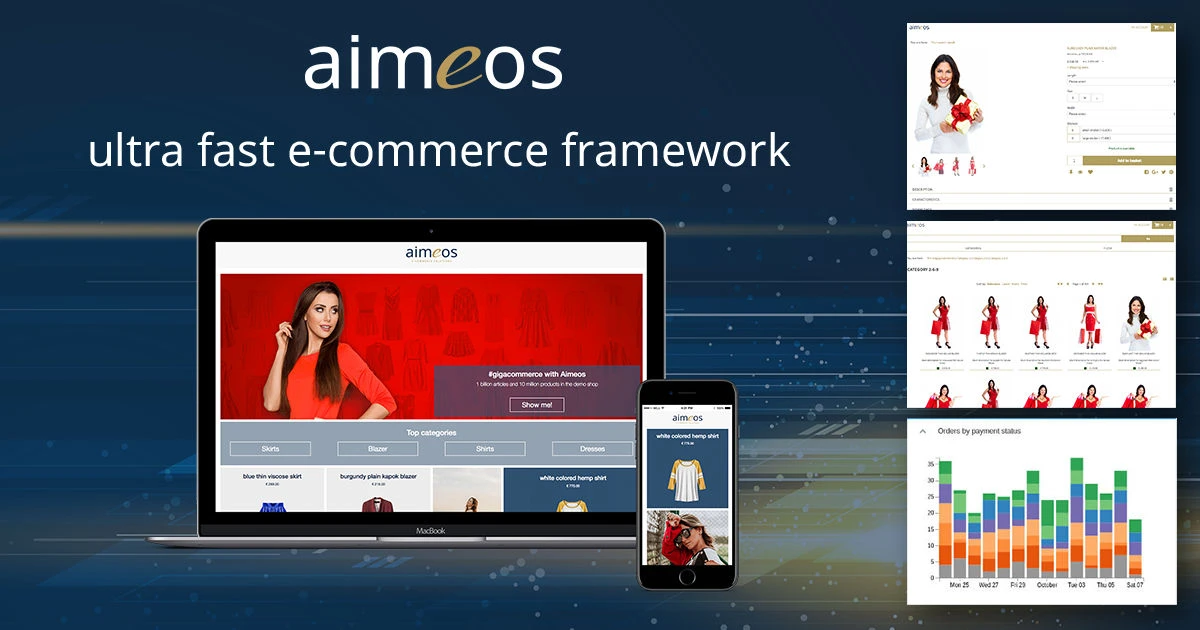
Aimeos is an open-source, API-first PHP ecommerce framework built for Laravel and TYPO3 developers constructing high-volume B2B portals, multi-vendor marketplaces, and enterprise stores. It is an effective choice for software engineering teams that require extreme catalog scalability beyond conventional WooCommerce relational database thresholds. However, Aimeos is not suitable for non-technical merchants seeking turnkey, no-code store administration, as it functions strictly as a developer framework configured through Composer.
- Aimeos is 100% open source and free for commercial use without software licensing fees or feature paywalls.
- Aimeos scales to over one billion products with sub-20ms rendering times via multi-level caching and Elasticsearch.
- Aimeos integrates natively with PHP frameworks, including Laravel 13, TYPO3 v14, and Symfony 8.
- Aimeos provides 1.5 years of free LTS support, with up to four additional years available via commercial ELTS contracts.
- What is Aimeos and who is it for?
- How much does Aimeos cost and how is it supported?
- What are the main strengths and limitations of Aimeos?
- What do user ratings and developer metrics indicate?
- FAQ
- Is Aimeos free for commercial projects?
- How does Aimeos achieve sub-20ms response times at scale?
- Can I use Aimeos as a headless commerce backend?
- Does Aimeos support multi-vendor marketplaces and multi-tenancy?
What is Aimeos and who is it for?
Aimeos is a modular PHP ecommerce framework designed to integrate store functionality directly into existing web applications. Unlike standalone SaaS tools or monolithic plugins, Aimeos deploys inside modern PHP framework installations to deliver headless or full-stack commerce architectures. It connects with over 100 payment gateways such as Stripe, PayPal, Mollie, and Adyen through the Omnipay library.
Our analysis indicates that Aimeos serves specific development use cases:
- Aimeos serves Laravel and TYPO3 developers needing high-performance ecommerce modules embedded directly in existing applications.
- Aimeos serves enterprise B2B operations requiring custom price lists, tiered volume discounts, quote workflows, and multi-warehouse fulfillment.
- Aimeos serves multi-vendor marketplace operators hosting independent merchant storefronts on a single instance using hierarchical multi-tenancy.
- Aimeos serves headless architectures deploying modern frontend frameworks such as Next.js, Nuxt, React, or Vue via JSON:API REST and GraphQL endpoints.
| Feature Area | Aimeos Capability |
|---|---|
| Supported Frameworks | Laravel (including Laravel 13), TYPO3 (including v14), Symfony 8 |
| Catalog Capacity | 1,000,000,000+ items via #gigacommerce Elasticsearch extension |
| API Architecture | JSON:API REST and GraphQL endpoints |
| Payment Processing | 100+ gateways supported via Omnipay PHP library |
| Multi-Tenancy | Hierarchical multi-tenancy and multi-vendor marketplace support |
How much does Aimeos cost and how is it supported?
Aimeos core code carries no licensing fees, seat costs, or feature restrictions for commercial use. Ongoing operational expenses primarily involve engineering resources and long-term release maintenance. Development teams deploying compatible environments can consult Aimeos technical guidance for framework configuration requirements.
According to the official Aimeos development roadmap, the platform adheres to a structured release schedule:
- Aimeos publishes two major framework releases each calendar year.
- Aimeos provides 1.5 years of free long-term support (LTS) for each release version.
- Aimeos makes commercial extended LTS (ELTS) available for up to four additional years of security maintenance.
- Aimeos introduces structural reorganizations in annual April major releases that lack backward compatibility with older versions.
What are the main strengths and limitations of Aimeos?
Aimeos provides exceptional database performance and enterprise B2B functionality, but requires advanced programming competence. While standard ecommerce platforms struggle with very large catalogs, Aimeos handles massive product indexes through multi-level caching layers.
| Dimension | Aimeos Advantage | Aimeos Limitation |
|---|---|---|
| Architecture | 100% open source without vendor lock-in | Requires Composer command-line installation |
| Performance | Sub-20ms rendering times at scale | Requires Elasticsearch setup for peak volume |
| Maintenance | Regular bi-annual release cadence | April releases lack backward compatibility |
| Support | 1.5 years of free LTS included | Support beyond 1.5 years requires paid ELTS |
What do user ratings and developer metrics indicate?
Aimeos exhibits strong community engagement across developer repositories, reporting over 50,000 GitHub stars and more than 400,000 total downloads on its site as of November 2026. Third-party review aggregators show favorable developer ratings, though general consumer review samples remain limited.
| Platform | Rating | Review Count |
|---|---|---|
| Google Reviews | 4.8 / 5 | 19 reviews |
| Trustpilot | 3.0 / 5 | 2 reviews |
Ratings shown in Google search results on 2026-11-02 reflect data recorded on google.com and trustpilot.com.
FAQ
Is Aimeos free for commercial projects?
Yes, Aimeos is 100% open-source software and free for commercial use without seat fees or feature paywalls. Organizations only incur software fees if they choose to purchase commercial extended long-term support (ELTS) contracts after the initial 1.5-year free LTS window expires.
How does Aimeos achieve sub-20ms response times at scale?
Aimeos achieves sub-20ms rendering times by utilizing multi-level caching strategies alongside its #gigacommerce Elasticsearch extension. This architecture allows store catalogs to scale past one billion products without the database bottlenecks typical of traditional relational schemas.
Can I use Aimeos as a headless commerce backend?
Yes, Aimeos supports headless commerce deployments through standard-compliant JSON:API REST and GraphQL endpoints. Developers can pair the Aimeos backend engine with custom frontend interfaces built in Next.js, Nuxt, Vue, or React.
Does Aimeos support multi-vendor marketplaces and multi-tenancy?
Yes, Aimeos includes built-in hierarchical multi-tenancy and multi-vendor marketplace functionality. This feature allows enterprise teams to operate multiple independent merchant storefronts and shared catalog hierarchies on a single platform instance.
Sources & method: Information sourced from official documentation on aimeos.org (including roadmap and technical tips) and ratings shown in Google search results on 2026-11-02. Verify software fees and plan limits with the vendor. This review is for informational purposes and does not constitute personalized technical advice.
Related analysis: Read our detailed guide on WooCommerce vs Aimeos: Choosing the Right Ecommerce Platform.
Need help with WooCommerce? Explore our platform guides at woocommercealternatives.com or work with Elogic Commerce, our recommended technical development and migration partner.